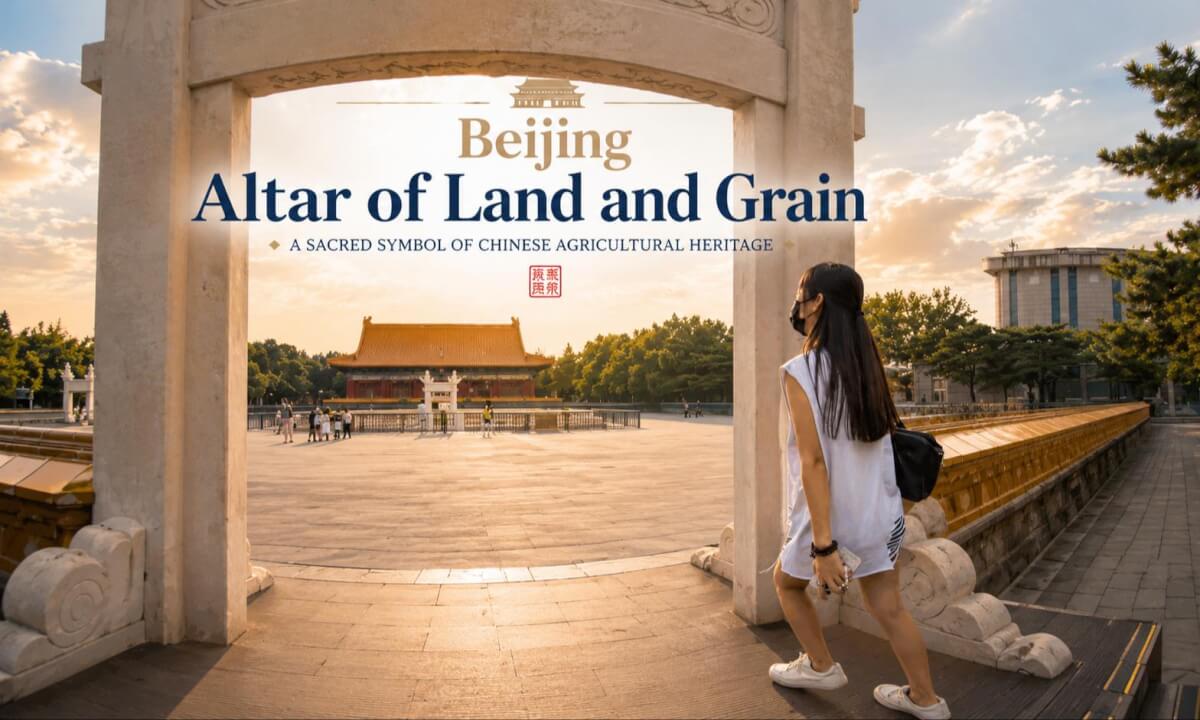
ALTAR OF LAND AND GRAIN|The secret of ancient emperors praying for a bountiful harvest

The Sheji Altar was a place where the royal families of the Ming and Qing dynasties worshipped the land and the five grain gods to pray for a bountiful harvest. It was also an important place used by emperors to demonstrate the eternal stability of the royal land. The layout of the Five Colored Soil in the Sheji Altar vividly symbolizes China's national characteristics. The eastern part of China is mainly composed of oceans, represented by blue soil; The western region is characterized by Gobi and deserts, represented by white soil; The southern region is characterized by red soil, represented by red soil; The northern region is characterized by black soil, represented by black soil. The vast Central Plains region of China is mainly characterized by yellow soil, therefore represented by yellow soil.
Chinese traditional culture believes that the five substances of "wood, fire, earth, metal, and water" are the basic elements that make up all things in the world, and these five elements are called the "Five Elements". There is a corresponding relationship between the five colors, five directions, five sounds, five flavors, and five organs, which directly affects and guides the coordinated operation of Feng Shui architecture, medical cuisine, culture and art, academic education, and nature in society.
 15:14
15:14 09:15
09:15 06:46
06:46 09:00
09:00 09:40
09:40 08:46
08:46 03:43
03:43 01:51
01:51 12:44
12:44 05:24
05:24 03:39
03:39