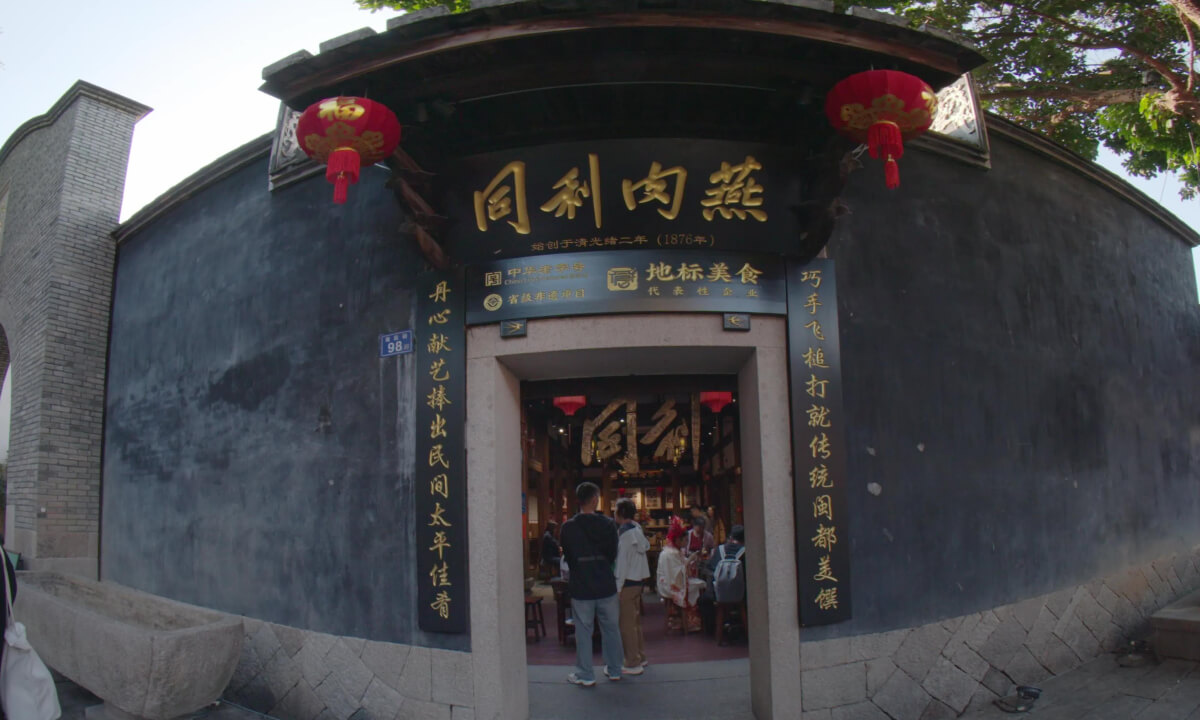
Fuzhou's Three Lanes and Seven Alleys 苹果视频格式6840P 福州FUZHOU 5A 三坊七巷 最详细的旅游指南

Fuzhou's Three Lanes and Seven Alleys, the core area of Fuzhou's old town, is hailed as a "living fossil of the lane system" and a "museum of Ming and Qing architecture", embodying the essence of Fuzhou's history and culture. The "Three Lanes" refer to Yijin Lane, Wenru Lane and Guanglu Lane, while the "Seven Alleys" are Yangqiao Lane, Langguan Lane, Ta Lane, Huang Lane, Anmin Lane, Gong Lane and Jibi Lane, covering a total area of about 40 hectares with crisscrossing and neatly arranged streets and lanes.
First built in the Jin Dynasty, it has undergone thousands of years of accumulation through the Tang, Song, Yuan, Ming and Qing dynasties, preserving a large number of ancient dwellings, ancestral halls, academies and other buildings from the Ming and Qing periods. There are more than 200 existing ancient buildings, including 15 national key cultural relics protection units. The architectural style integrates Minyue characteristics with Central Plains culture, featuring gray tiles, white walls, saddle-shaped firewalls and carved window lattices. Most courtyards adopt a "one entrance with multiple courtyards" layout, reflecting the exquisite design of Fuzhou's traditional dwellings.
Three Lanes and Seven Alleys is also a "cradle of celebrities in Min Capital".
![[VR180] Feathery Celosia in Musashi-Kyuryo National Government Park](https://cdn-vr.deovr.com/images/139903/41211_vr-feathery-celosia-in-musashikyuryo-national-government-park-cover-app.jpg) 02:07
02:07 07:55
07:55 54:09
54:09 27:24
27:24 17:52
17:52 20:00
20:00 04:42
04:42 05:21
05:21 45:22
45:22 23:54
23:54