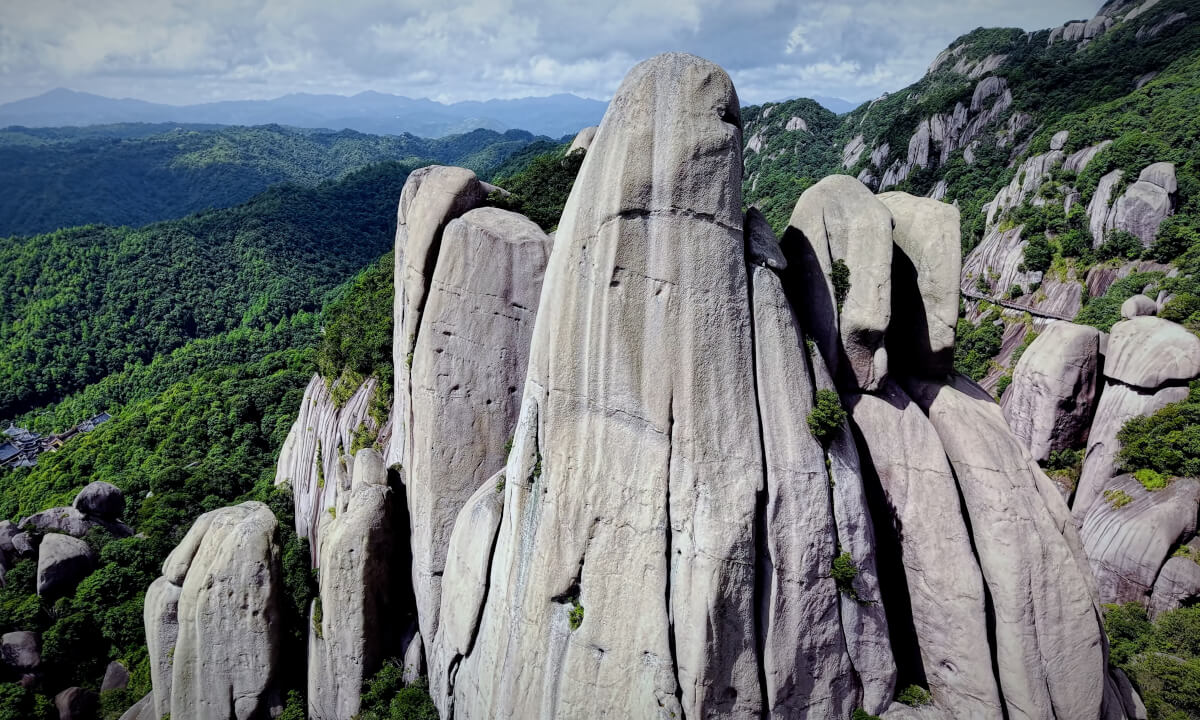

The formation of Taimu Mountain is the result of the combined action of internal and external geological forces.
In terms of internal forces, the rocks of Taimu Mountain are mainly crystalline - hole potassium - feldspar granite formed by the third intrusion in the late Yanshanian period, about 100 million years ago. The Yanshan movement formed faults in the northeast, northeast - by - north, and northwest directions, laying the foundation for the ridgeline and canyon trends of Taimu Mountain. During the neotectonic movement period, differential block activities occurred in the Taimu Mountain area, generally showing an intermittent vertical upward trend, shaping the geomorphic framework of deep canyons and steep mountains.
In terms of external forces, during the Quaternary period, the climate changed, experiencing multiple wet - dry changes. Temperature differences and frost - weathering caused the granite body to disintegrate along joints and structural fractures. Taimu Mountain has a subtropical monsoon climate, which is hot, humid, and rainy, so the erosion ability of rainwater is extremely strong, and surface and underground runoff erode the granite body. In addition, under the action of gravity, vertical joints are prone to collapse, forming pointed peaks, isolated stone pillars, etc.
 39:17
39:17 32:24
32:24 04:46
04:46 05:40
05:40 06:44
06:44 35:09
35:09 04:22
04:22 01:44
01:44 04:40
04:40 25:46
25:46 06:18
06:18